Cisco anyconnect vpn cant access the internet heres how to fix it (VPNs) Quick Guide for Canada

Cisco AnyConnect VPN can feel frustrating when you can’t access the internet after connecting. Here’s a clear, practical guide to diagnose and fix the issue so you’re back online fast. This post uses real-life steps, practical tips, and a friendly, no-nonsense approach so you can get through it without tech headaches.


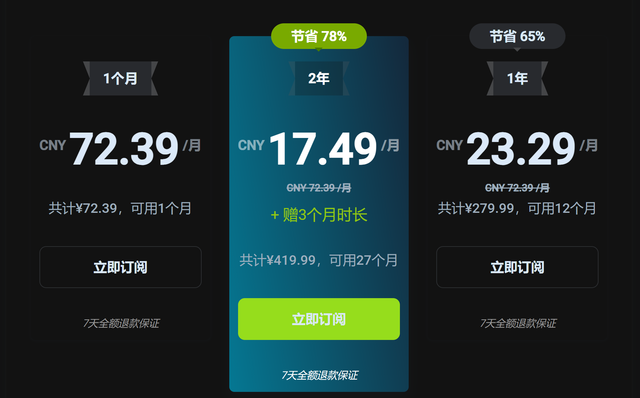

Useful note: if you’re browsing for a trusted VPN to complement your setup, consider NordVPN as a backup option for secure, fast connections. It’s popular with many users who want easy setup and strong privacy protection. NordVPN link: https://go.nordvpn.net/aff_c?offer_id=15&aff_id=132441
Cisco anyconnect vpn cant access the internet heres how to fix it — the quick fix is often a DNS or tunnel issue, not the VPN itself. Here’s a fast, practical roadmap you can follow: Nordvpn app not logging in fix it fast step by step guide: Quick, reliable solutions for NordVPN login issues
- Quick fact: DNS leaks or proxy settings are the top culprits behind “VPN connected, no internet.”
- Step-by-step: check DNS, reset tunnel, adjust split tunneling, verify gateway and firewall rules.
- Formats you’ll find helpful: quick checklist, step-by-step guide, and a troubleshooting table with common error codes.
- Quick resources: see the end of this intro for useful URLs and reference pages.
What you’ll learn
- Why the VPN connects but no internet shows up
- How to fix DNS, gateway, and route problems
- How to adjust Cisco AnyConnect settings for reliable internet access
- What to check on Windows, macOS, and mobile devices
- Common error codes and how to interpret them
- When to contact your IT department or VPN administrator
Table of contents
- Why you might lose internet access after connecting
- Quick checks you can do in minutes
- Step-by-step fixes order matters
- Router and network considerations
- Platform-specific steps Windows, macOS, iOS, Android
- VPN client and server side considerations
- Advanced troubleshooting: routing, DNS, and split tunneling
- When to seek help
- Useful resources and references
- Frequently asked questions
Why you might lose internet access after connecting Several things can go wrong after you connect to Cisco AnyConnect:
- DNS resolution issues: your device can’t find domain names, so you can’t reach websites even though the tunnel is up.
- Incorrect default gateway: the VPN assigns a gateway that isn’t reachable or properly route-pushed.
- Split tunneling misconfiguration: if only some traffic goes through the VPN, regular internet traffic might be blocked.
- Firewall or antivirus interference: security software blocks the VPN’s traffic or DNS requests.
- IPv6 vs IPv4 conflicts: dual-stack setups can cause routes to prefer the wrong protocol.
- Server-side restrictions: the VPN server enforces policies that block certain routes or traffic types.
- DNS hijacking by local network: the network you’re on overrides DNS, causing resolution failures.
- Client version issues: outdated Cisco AnyConnect client can have compatibility or bug issues.
Quick checks you can do in minutes
- Check internet on a non-VPN connection: ensure your base internet works.
- Ping test: open a command prompt or terminal and ping 8.8.8.8 to confirm basic connectivity, then ping a domain like google.com to check DNS.
- Verify VPN status: look for “Connected” in the AnyConnect client and note the gateway address.
- Check DNS settings: ensure the VPN is not forcing a DNS that’s unreachable; try switching to automatic DNS or using a public DNS 1.1.1.1 or 8.8.8.8 temporarily.
- Confirm routing: make sure there’s a default route via the VPN when connected.
Step-by-step fixes ordered by likelihood of success Softether vpn 클라이언트 완벽 가이드 무료 vpn 설정부터 활용법까지 2026년 최신
- Restart and re-establish
- Disconnect the VPN, save any ongoing work, then reconnect.
- If you’re on a corporate network, try a different network cell hotspot or another Wi‑Fi to rule out local network issues.
- Reset network stack Windows
- Open Command Prompt as administrator.
- Run these commands in order:
- ipconfig /release
- ipconfig /flushdns
- ipconfig /renew
- netsh winsock reset
- Reset network stack macOS
- Open Terminal.
- Run:
- sudo dscacheutil -flushcache
- sudo killall -HUP mDNSResponder
- sudo ifconfig en0 down && sudo ifconfig en0 up replace en0 with your active interface
- Check and adjust DNS
- If DNS failures persist, set DNS servers manually:
- Windows: Network Connections > your adapter > Properties > Internet Protocol Version 4 TCP/IPv4 > Use the following DNS server addresses: 1.1.1.1 and 1.0.0.1
- macOS: System Preferences > Network > your connection > DNS > add 1.1.1.1 and 8.8.8.8
- If DNS failures persist, set DNS servers manually:
- Verify split tunneling settings
- Some VPNs use split tunneling by default. If your corporate policy requires all traffic through VPN, ensure “All traffic” or “Block local LAN access” isn’t causing issues.
- In AnyConnect, check for a setting like “Send all traffic through VPN” or equivalent. If unsure, contact your IT admin to verify policy.
- Check the VPN’s assigned gateway and routes
- On Windows: open Command Prompt and run:
- route print
- netstat -rn
- On Windows: open Command Prompt and run:
- Firewall and security software
- Temporarily disable antivirus or firewall software to see if it’s blocking VPN traffic. If this resolves the issue, add an exception for AnyConnect in your security software.
- Ensure Windows Defender or macOS security isn’t filtering VPN traffic.
- Check IPv6 settings
- Disable IPv6 temporarily to test if IPv6 is causing routing issues.
- Windows: Network adapter properties > uncheck Internet Protocol Version 6 TCP/IPv6
- macOS: System Preferences > Network > Advanced > TCP/IP > Configure IPv6: Link-local Only
- If disabling IPv6 fixes the issue, you may need to configure IPv6 properly or keep it disabled for VPN use.
- Update or reinstall Cisco AnyConnect
- Check for the latest client version compatible with your VPN server.
- Uninstall and reinstall the client to fix corrupted files or misconfigurations.
- After reinstall, restart and try connecting again.
- Check the VPN server and policy
- Sometimes the issue is server-side: your VPN administrator may have policy changes, certificate issues, or maintenance in progress.
- Contact IT support with details: client version, time of day, error codes, and a screenshot of the AnyConnect error if possible.
Router and network considerations
- If you’re on a home router, ensure UPnP isn’t conflicting with VPN traffic. Some routers need a reboot after VPN connection.
- Check for MTU settings. A misconfigured MTU can cause packet fragmentation and dropped packets. Try lowering MTU to 1500 or testing 1472 as a basic test.
- If you’re on a corporate VPN at work, confirm there’s no network-level block on VPN traffic or DNS resolution, especially on guest networks.
Platform-specific steps Windows
- Use the built-in Network Troubleshooter Settings > Network & Internet > Status > Network Troubleshooter to identify issues.
- Ensure VPN client uses the correct DNS servers and that the VPN tunnel interface has proper IP addressing.
- Verify Windows network profile is set to Private rather than Public to allow VPN traffic if your IT policy allows it.
MacOS
- Check System Preferences > Network > AnyConnect-related interface. Ensure the service is at the top of the service order if required by your setup.
- Remove stale profiles that might misroute traffic: open Keychain Access and delete any old VPN certificates if you suspect credential problems.
- Confirm system firewall isn’t blocking the VPN.
Android
- Ensure you’re using the latest AnyConnect app from the Google Play Store.
- In Android settings, check the VPN and device management permissions. Some devices require explicit permission for VPN apps.
- Try toggling the Private DNS setting Under Network & Internet to Google or Cloudflare to test DNS behavior with VPN.
IOS How to Install and Use Urban VPN Chrome Extension for Basic IP Masking and More Tips
- Confirm the VPN profile is installed correctly in Settings > General > VPN & Device Management.
- If you see a “Connected, No Internet” message, often DNS is the culprit. Switch to a different DNS provider temporarily to test.
VPN client and server side considerations
- Certificate validity: expired or revoked certificates can cause connection issues. Your IT admin may need to renew or reissue certificates.
- Protocols: Some servers prefer IKEv2, others SSL VPN. Ensure your client config matches server expectations.
- Port and transport: Certain networks block non-standard ports. If your IT department can, check whether you need TCP 443 or UDP/500 for IKE/IPsec.
- DNS push policy: If the VPN server is pushing DNS settings that are unreachable, you may want to disable DNS pushing temporarily under IT-provided policy to isolate the issue.
- Kill-switch and leak protection: Some VPNs offer a kill switch that can block all traffic if the tunnel isn’t secure. Temporarily adjust it to test internet access.
Advanced troubleshooting: routing, DNS, and split tunneling
- Analyze routing: Ensure there is a proper default route via the VPN. If your VPN adds a route that’s too narrow, your traffic may not go through.
- DNS leaks: Use online DNS leak tests to verify DNS requests are going through the VPN’s DNS servers when connected.
- Split tunneling evaluation: If split tunneling is enabled, test by turning it off to force all traffic through the VPN, then test internet access.
- Check for IPv6 issues: Even if IPv4 works, IPv6 can cause leaks or misrouting. Consider disabling IPv6 on the VPN adapter or at the OS level during testing.
Common error codes and what they mean
- 0x0000 or general failure: client or server misconfiguration; retry with updated software.
- 43: invalid client certificate or server rejected the client; contact IT.
- 1325: DNS resolution failure; inspect DNS settings and server push.
- 442: the VPN gateway rejected the connection; possible policy or certificate issue.
- 57/57: tunnel is up but traffic blocked by firewall or policy; check security software.
When to seek help
- You’re unable to fix the issue after trying the above steps.
- Your IT department has a known outage or policy change.
- Reproducible errors appear across multiple devices and networks.
- You receive specific error codes you don’t understand, or you’re seeing certificate warnings.
Useful resources and references How to download and install the NordVPN app on Windows 11: Quick Guide, Tips, and Troubleshooting
- Cisco AnyConnect VPN troubleshooting basics - cisco.com
- DNS troubleshooting for VPNs - en.wikipedia.org/wiki/Domain_Name_System
- IPv4 vs IPv6 in VPNs - wikipedia.org/wiki/IPv6
- VPN split tunneling overview - en.wikipedia.org/wiki/VPN_split_tunneling
- Networking troubleshooting commands reference - technet.microsoft.com or macOS terminal commands guide
- Corporate IT VPN policies and contact info – your organization’s IT portal or helpdesk
Frequently Asked Questions
Why does Cisco AnyConnect say connected but no internet?
This usually means a DNS or routing issue, or the VPN is not forwarding all traffic correctly. Check DNS servers, routes, and split tunneling settings, and verify the VPN policy requires all traffic to go through the tunnel.
How can I test if DNS is the problem?
Try changing DNS to a public resolver 1.1.1.1, 8.8.8.8 and flush DNS cache. Then, test visiting a domain name like example.com to see if it resolves.
Should I disable IPv6 to fix VPN internet access?
Sometimes yes, as IPv6 can cause routing issues. If you disable IPv6 and internet access returns, you may need to configure IPv6 properly for VPN use or keep it disabled while using VPN.
What is split tunneling and should I enable it?
Split tunneling lets some traffic go through the VPN while other traffic uses your regular internet. If you have internet issues, try turning split tunneling off to force all traffic through the VPN, then test. Where Is My Location How to Check Your IP Address With NordVPN: Quick Guide, Tips, and VPN Basics
How do I reset the VPN client on Windows?
Uninstall the AnyConnect client, restart your computer, reinstall the latest version from your organization’s portal or Cisco’s site, and reconnect.
How do I know if the VPN server is the problem?
If you have access to another VPN server or can connect from a different network and device, compare results. If it only fails on one server, the issue is server-side.
Can antivirus or firewall block VPN access?
Yes. Temporarily disable or create exceptions for the VPN client to see if it resolves the issue, then re-enable protection and test again.
How do I verify the VPN tunnel interface is working?
On Windows, run route print to view routes through the VPN adapter. On macOS, run netstat -nr or route -n get to verify the VPN route is active.
What if I still can’t access the internet after fix attempts?
Document error messages, time stamps, and steps you took. Reach out to IT with a detailed report or contact Cisco Support for advanced diagnostics. Urban vpn para chrome 크롬에서 무료 vpn 사용법 완벽 가이드 2026년 업데이트
Is there a best practice for VPNs on shared networks?
Yes. Use a trusted VPN provider for additional privacy, ensure your corporate VPN is configured with proper trust and policy controls, and avoid insecure public networks for sensitive work.
Note: If you’re exploring secure alternatives, NordVPN is a popular backup option for personal use, offering straightforward setup and strong privacy protections. NordVPN link: https://go.nordvpn.net/aff_c?offer_id=15&aff_id=132441
End of article.
Sources:
Proton vpn windows:全面提升上网隐私与速度的实用指南
连 上vpn之后 上 不了 外网:原因解析、排错步骤与实用对策(VPN 连接后无法访问外网的全面指南) Nordvpn extension for edge your quick guide to download install and use
Jak wlaczyc vpn w przegladarce microsoft edge pelny przewodnik
翻墙vpn安卓:2025年在安卓设备上选择、设置与安全使用全攻略